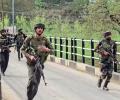
"More than 85,000 domiciles have been issued to non-locals, creating a pathway for demographic change in Jammu & Kashmir. These non-locals arrive posing as tourists, obtain domiciles, and then begin to act as if they own the land. Consequently, violence will be directed toward those attempting to settle illegally," TRF said in a statement which could not be independently verified by Rediff.
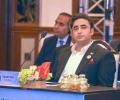
Bhutto, who served as the Foreign Minister earlier, addressed a briefing at the UN Headquarters in New York and sought reconciliation with India, making a plea for talks and Intel sharing between the two neighbours.

India's marquee women's ODI World Cup match against Pakistan will be held at the neutral venue of R Premadasa Stadium in Colombo on October 5, the ICC announced on Monday.
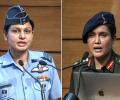
India conducted precision strikes on nine terror targets in Pakistan and Pakistan-Occupied Kashmir, targeting terrorist infrastructure to deter further attacks. The operation, codenamed 'Operation Sindoor', was detailed by two women military officers, Col Sofiya Qureshi and Wing Commander Vyomika Singh, at a press briefing in New Delhi. The officers highlighted the precise nature of the strikes, emphasizing the use of "niche technology weapons" to ensure no collateral damage. The briefing showcased India's military prowess and the growing role of women in the armed forces.
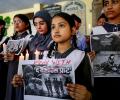
An Indian delegation met top officials of the United Nations Office of Counter-Terrorism (UNOCT) and Counter-Terrorism Committee Executive Directorate here even as New Delhi stepped up efforts to designate The Resistance Front, a Lashkar-e-Tayyaba proxy, as a UN-listed terror outfit for its alleged involvement in the Pahalgam attack.
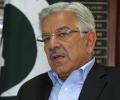
Regarding the possibility of talks, the minister said he was not aware of any such potential engagements.
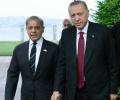
Pakistan Prime Minister Shehbaz Sharif met with Turkish President Recep Tayyip Erdogan to review bilateral relations and reaffirm their commitment to strengthening their strategic partnership. The two leaders discussed joint ventures and enhanced bilateral investment in key sectors, aiming to achieve a $5 billion annual bilateral trade target. They also expressed gratitude for mutual support during recent tensions with India. The meeting was described as "warm and most cordial," highlighting the deep-rooted historical ties between Pakistan and Turkey.
The United Nations Security Council (UNSC) has strongly condemned the terrorist attack in Jammu and Kashmir, urging that those responsible be held accountable and brought to justice. The Council issued a press statement expressing its deepest sympathy to the victims' families and calling for all states to cooperate in combating terrorism. UN Secretary-General Antonio Guterres also expressed concern about the situation, urging India and Pakistan to exercise restraint.

The address comes two days after India and Pakistan reached an understanding to stop all firing and military actions on land, air and sea with immediate effect.
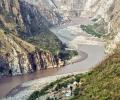
Pakistan may face a significant water shortage during the Kharif season due to reduced water supplies from India.
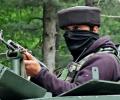
Indian cricketers - both past and present - have voiced strong support for the armed forces following a daring cross-border strike
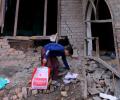
Amid escalating tensions between India and Pakistan, the US has said it will not get involved in the conflict, stressing that it is "fundamentally none of our business." While acknowledging concerns about a potential nuclear war, Vice President J D Vance emphasized that the US cannot control India and Pakistan, but can encourage them to de-escalate. The US has also reiterated its support for direct dialogue between the two countries and encouraged efforts to improve communications.
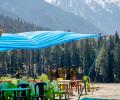
The entry and exit points are being closely scrutinised by the investigating NIA teams for clues to the modus operandi of the terrorists, the officials said.

Doval briefed his counterparts in the United States, United Kingdom, Saudi Arabia and Japan about India's missile strikes against terror infrastructure in Pakistan and Pakistan-occupied Jammu and Kashmir. He also established contact with Russia and France, officials said.

According to the DRDO chairman, the BrahMos missile, primarily launched from Sukhoi Mk 1, was used during the offensive phase.
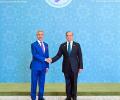
Pakistan Prime Minister Shehbaz Sharif said his country wants to resolve all issues, including Kashmir, with India through talks. He reiterated his "unwavering " support for the Kashmiri people during a speech in Muzaffarabad on the occasion of "Kashmir Solidarity Day. "
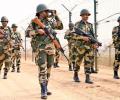
The Border Security Force (BSF) foiled a major infiltration attempt by suspected terrorists along the International Border (IB) in Samba district of Jammu and Kashmir. The incident occurred on May 8, 2025, amid heightened tensions between India and Pakistan. It is not yet clear whether any terrorists were hit by the firing.

In a post on X, Sherman said that he 'emphasised to the Pakistani delegation the importance of combatting terrorism, and in particular, the group Jaish-e-Mohammed, who murdered my constituent Daniel Pearl in 2002'.

People along the Line of Control and International Border in the Jammu region continue to live under the shadow of death, with unexploded mortar shells fired by Pakistani troops still embedded in farmlands and residential areas even though hostilities have stopped for nearly a week. IMAGE: Kindly note that this image has been posted for representational purposes only. Photograph: / Rediff.com Despite the May 10 understanding between India and Pakistan, locals describe the border areas as a 'death trap'. Sixty-two-year-old Balvinder Singh, who returned to his home in Pargwal sector on May 14, recounted a narrow escape. "Two shells exploded in our compound, damaging our house. Three more landed on our farmland. We were terrified and told our family to stay away from the fields until the Army could help," Singh told PTI. Army engineers later came to the village and safely defused the unexploded shells, bringing a temporary sense of relief. "Fear is writ large on the faces of people to these death traps in border hamlets", he said. Scenes of destruction are evident rooftops torn apart, broken houses, windows punctured by shrapnel, and carcasses of cattle lying in pools of blood. The acrid smell of gunpowder still lingers in the air. Sardar Gurmeet Singh faced a similar ordeal. His family could not re-enter their home as a live mortar shell had sunk into the compound in a village close to the International Border. "The army's bomb disposal squad removed it after four days, allowing us to finally enter, back home," he said. Indian Army engineers have launched a sweeping clearance operation across border districts, defusing over 80 unexploded shells in the past five days -- including 6 in Pargwal, 19 in Rajouri, 42 in Poonch, and 12 along the IB. "These shells, mostly 120 mm calibre, have a range of 15 to 30 km and pose a serious threat to both civilian and military targets," an Army officer said. "Many of them were fired by Pakistan during recent hostilities." On May 7, the Indian Army launched Operation Sindoor, conducting precision strikes on nine terror hubs in Pakistan and Pakistan-occupied Jammu and Kashmir (PoJK) in response to the April 22 terror attack in Pahalgam that killed 26 people, most of them tourists. The subsequent retaliation by Pakistan pushed the region to the brink of war. From 7 to 10 of May, 27 civilians were killed and over 70 injured in Pakistani shelling in the Jammu region. Farid Din Gujjar, a resident near the border, expressed fear about returning to his fields. "Several shells created deep craters in our paddy land. We cannot resume work until all unexploded ordnance is cleared. It's a death trap," he said. Army units, in coordination with Jammu and Kashmir Police, have evacuated high-risk zones and issued stern warnings to residents not to touch any suspicious objects or unexploded shells. In one major operation, 42 live shells were safely destroyed in the Poonch villages of Jhullas, Salotri, Dharati and Salani. "All safety protocols were followed. The shells posed a serious danger to local lives," an Army spokesperson said, calling the effort a 'continued commitment to protect civilians and restore normalcy'. Poonch saw the vast majority of deaths due to shelling. Security officials said that Pakistan used a mix of mortar shells, armed drones, and missiles during the shelling spree, specifically targeting civilian habitations and border towns in Jammu, Samba, Kathua, Rajouri, and Poonch. As clearance operations continue, the border residents are slowly returning to their homes, but with caution, fear, and lingering uncertainty about shelling that may yet happen in the future.
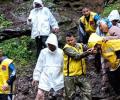
Glimpses from India and around the world that will make you smile and cry.

BCCI secretary Devajit Saikia said that an invitation has been extended to chiefs of all three Armed forces, top-ranked officers and soldiers for the IPL 2025 final on June 3.
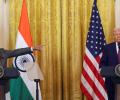
Prime Minister Narendra Modi spoke with President Donald Trump and set the record straight that India had paused strikes on Pakistan during Operation Sindoor following a request from Islamabad and not due to mediation or offer of a trade deal by the United States.
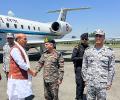
Defence Minister Rajnath Singh on Thursday questioned the safety of nuclear weapons in the hands of Pakistan, and said they should be taken under monitoring of the International Atomic Energy Agency.
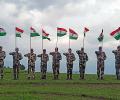
With respect and gratitude we honour the memory of soldiers who sacrificed their lives in Operation Sindoor.

Test skipper Shubman Gill was on Thursday named captain of the North Zone squad for the upcoming Duleep Trophy, beginning August 28, less than three weeks after he led a young Indian side to a thrilling 2-2 draw against England in a gruelling five-Test series.
The UN Security Council will hold closed consultations on Monday on the situation between India and Pakistan after Islamabad sought an emergency meeting on the issue. Pakistan, which currently sits as a non-permanent member of the council, requested the meeting in light of rising tensions between the two countries following a terror attack in India. The meeting comes after India's foreign minister spoke with all council members except China and Pakistan, emphasizing the need to bring perpetrators of the attack to justice. The Pakistani envoy has argued that the situation in Jammu and Kashmir poses a threat to regional and international peace and security, justifying the need for a council discussion.
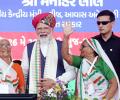
'The country that came into existence after Partition lives on hatred for India. It only wants to harm Bharat. However, India's goals are to remove poverty, bring about economic development and become a developed nation'
'Unlike the surgical strikes and the Balakot air strikes across the LoC, we have gone further inside Pakistan and raised the bar of escalation.'
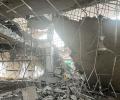
Indian Air Force S-400 Sudarshan Chakra air defence missile systems were fired last night against targets moving towards India. The targets were successfully neutralised in the operation multiple domain experts told ANI.

The Border Security Force (BSF) remains on high alert along the International Border (IB) and has not let its guard down, BSF Inspector General, Jammu Frontier, Shashank Anand said on Tuesday. Operation Sindoor, aimed at preventing infiltration attempts, continues as Pakistan cannot be trusted, he added. Anand highlighted the BSF's robust response after the April 22 Pahalgam terror attack, including destroying multiple terror launch pads and thwarting infiltration attempts.
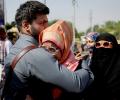
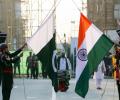
As India's deadline for Pakistani citizens to leave the country passed, chaotic scenes unfolded at the Attari-Wagah land crossing in Punjab.
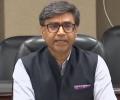
India has accused Pakistan of breaching an understanding reached earlier on Saturday to stop military actions. Foreign Secretary Vikram Misri said there have been repeated violations of the understanding since the evening, and that the Indian armed forces are giving an appropriate response.
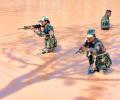
'The attack in Pahalgam targeted the husbands of many women so it was a direct blow to our sindoor'

He added, "You can never trust Pakistan as long as the Pakistani deep state, Pakistani ISI, Pakistani military's objective is to destabilise Bharat."

Chief of Defence Staff General Anil Chauhan emphasized the need for constant high military preparedness, citing Operation Sindoor as an ongoing example. He also highlighted the importance of 'information warriors, technology warriors and scholar warriors' in future warfare.
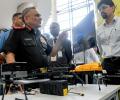
Chief of Defence Staff General Anil Chauhan emphasizes the importance of self-reliance in Unmanned Aerial Vehicles (UAVs) and Counter-Unmanned Aerial Systems (C-UAS) for India, citing recent global conflicts and Operation Sindoor as examples of their strategic importance.
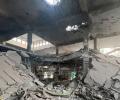
'This operation was a culmination of such long (period) of efforts, and gives us satisfaction that whatever we have been doing, we have been doing correctly'
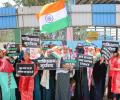
The Indian government has blocked 16 Pakistani YouTube channels for allegedly disseminating provocative and communally sensitive content as well as false and misleading narratives against India, its Army and security agencies. The decision was taken following recommendations from the Ministry of Home Affairs in the wake of the April 22 terror attack at Jammu and Kashmir's Pahalgam in which 26 people, mostly tourists, were killed.

Pakistan's star javelin thrower Arshad Nadeem has refused to comment on his arch-rival Neeraj Chopra.
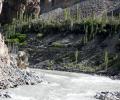
Emergency legal and constitutional consultations were held in response to India's unilateral move, and preliminary groundwork has been completed after which it has been decided to formally serve a diplomatic notice to India over the suspension of the treaty
